6 golden rules of coding
Errors may lead to denial, delayed payment
Denial and delayed payment of claims often occur because of common coding errors.
To avoid these pitfalls, below are six “golden rules” to remember.
• Code for what you do. This is the fundamental rule to apply in all coding situations.
• After reading the full nomenclature and descriptor, select the code that matches the procedure delivered to the patient.
• If there is no applicable code, document the service using an “unspecified … procedure, by report” code for the category of service and include a clear and appropriate narrative.
• Understand that the existence of a procedure code does not mean the procedure is a covered or reimbursed benefit in a dental benefit plan.
• Plan treatment based on clinical need, not covered services.
• Discuss common coding situations with office team members so that everyone understands how to use the CDT Code, and review coding for complex treatment plans before claims are submitted to payers.
If dentists have difficulty finding an appropriate CDT code, they should consider whether there may be another way to describe the procedure. The CDT manual’s alphabetic index and the glossary of clinical terms available online at ADA.org/CDT may be helpful in these situations. Dentists can also reach out to the ADA for help at dentalcode@ada.org.
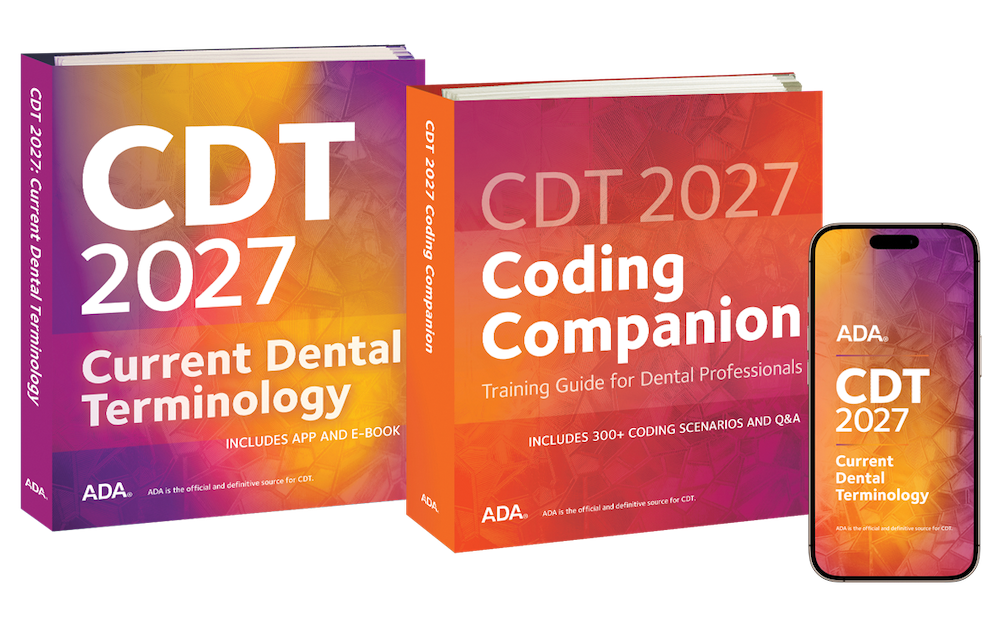
The next edition of the CDT Code, CDT 2027, will be released in the fall. It includes 67 changes. More information about the changes is available under the Code Maintenance Committee section of ADA.org/CDT. Exact code numbers, nomenclatures and descriptors for the new and revised codes will be published in CDT 2027.