December JADA evaluates anesthesia’s effect on speech
Patients may report difficulty speaking because of numbness
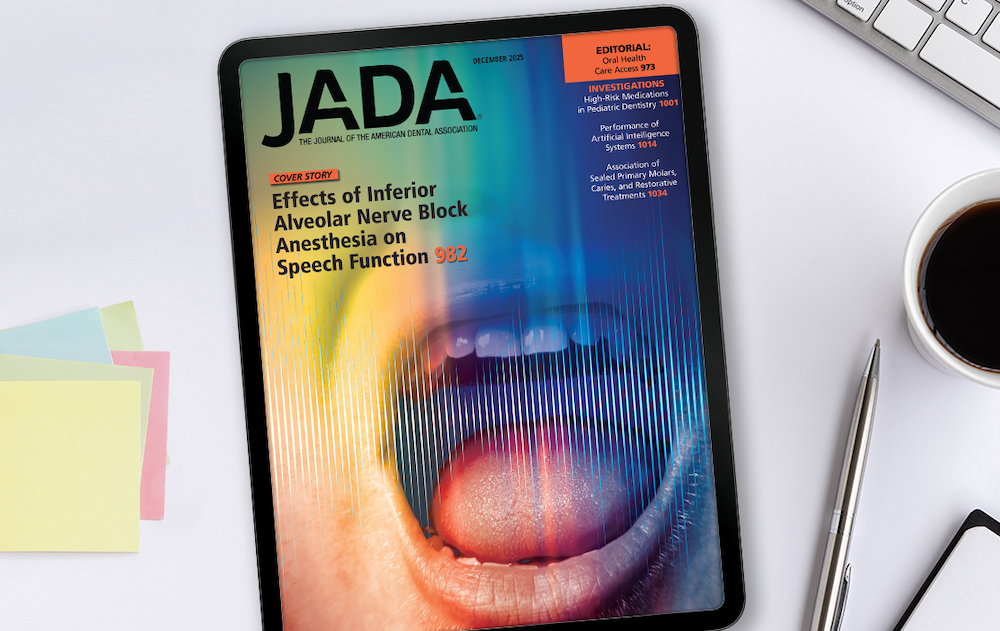
While inferior alveolar nerve block anesthesia does not appear to affect objective measures of speech and voice quality, patients may report difficulty speaking because of numbness in the tongue and lips, according to a study published in the December issue of The Journal of the American Dental Association.
The cover story, “Effect of Inferior Alveolar and Lingual Nerve Block Anesthesia on Acoustic Voice Quality and Speech Effort: A Within-Subject Study,” set out to evaluate the effects of inferior alveolar nerve block anesthesia on acoustic voice quality and speech articulation using objective measurements and subjective self-assessments.
The study included 34 adult patients undergoing inferior alveolar nerve block anesthesia whose voices were recorded before and after anesthesia. No statistically significant changes were found in acoustic voice quality indexes, formant values or speech articulation parameters between the recordings, but participants reported a significant increase in perceived speech effort after anesthesia.
“These findings highlight the need for clinicians to address patient concerns about speech changes after local anesthesia, even when objective alterations are minimal. … Dentists and oral surgeons should acknowledge these perceptual effects, particularly when managing the care of people with speech-critical occupations or those prone to prolonged sensory disturbances such as paresthesia,” the authors said in the study.
Other articles in the December issue of JADA discuss high-risk medications in pediatric dentistry, the performance of artificial intelligence systems and the role of dentists in promoting HPV vaccination.
Every month, JADA articles are published online at JADA.ADA.org. ADA members can access JADA content with their ADA username and password.