ADA 2026 Scientific Session to tackle real clinical challenges faced by dentists
Program brings together leading experts to provide actionable insights
Programming at the ADA 2026 Scientific Session will reflect real clinical challenges dentists are navigating in their practices today, helping to provide clarity where evidence and guidance are evolving.
“Continuing education at the Scientific Session will be structured around practical application, not just theory,” said ADA President-elect Thomas Paumier, D.D.S. “A central focus will be helping dentists apply research, data and clinical guidance to the everyday care of their patients. Attendees will gain actionable insights they can implement immediately in their practices.”
The Scientific Session will take place Oct. 8-10 at the Indiana Convention Center in Indianapolis. Its programming will bring together leading clinicians, researchers and subject matter experts across specialties to provide trusted insights grounded in research and real-world clinical experience.
The CE program will cover topics inspired by clinical guidelines, oral-systemic health and research published in The Journal of the American Dental Association. Topics include antibiotic stewardship, oral cancer detection, patient selection for cone-beam computed tomography, systemic diseases, odontogenic and nonodontogenic pain, regenerative engineering, diagnostic challenges, photobiomodulation, rare diseases and more.
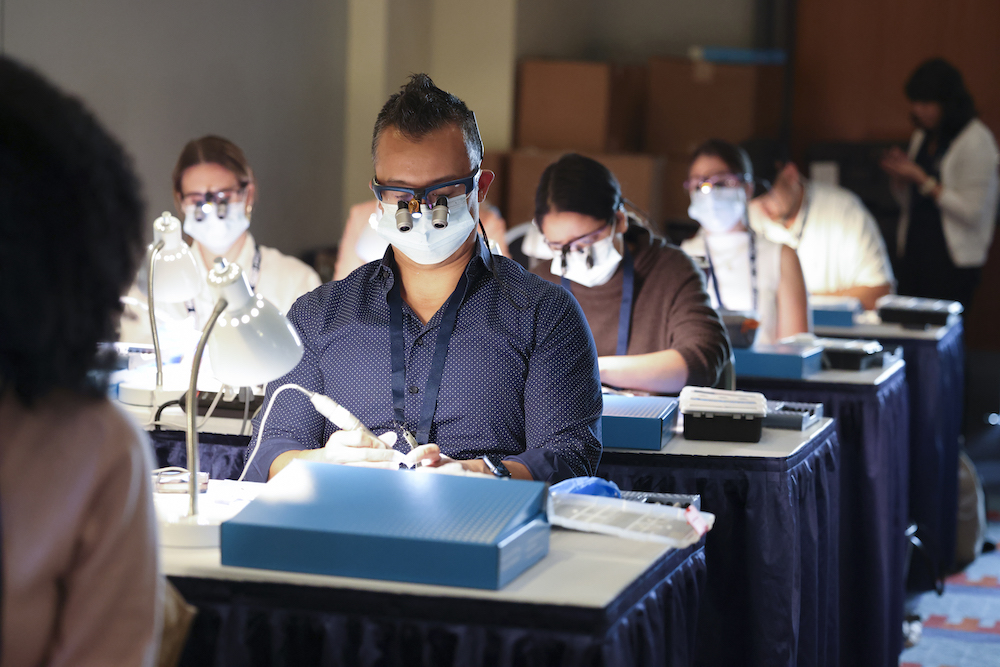
Hands-on workshops at the meeting will tackle subjects such as biopsies, digital workflows and complex endodontic and oral surgery cases, while panels will discuss artificial intelligence, pharmacology, the oral microbiome and more.
One of those panels, Digital Intelligence — the Expanding Role of AI Across Dentistry (6107), will be moderated by Tim Wright, D.D.S., editor-in-chief of JADA and professor at the University of North Carolina at Chapel Hill Adams School of Dentistry. Panelists include Mohammed Elnagar, D.D.S., Ph.D., associate professor at the University of Illinois Chicago, and Sang J. Lee, D.M.D., associate professor at the Harvard School of Dental Medicine.
Through the panel discussion, dentists will understand the breadth of current and emerging AI technologies and applications in dentistry and recognize the potential benefits and limitations of these technologies in clinical decision-making and patient care.
A panel addressing oral-systemic health — The Oral Systemic Interface: Inflammation Without Borders (5105) — will bring together leading periodontal experts to explore the evolving evidence behind the oral-systemic connection and its implications in clinical practice.
Panelists Mia Geisinger, D.D.S., professor at the University of Alabama at Birmingham School of Dentistry, and Yvonne Hernandez-Kapila, D.D.S., Ph.D., professor and associate dean for research at the University of California, Los Angeles School of Dentistry, will use real cases to examine how periodontal inflammation influences Alzheimer’s disease, cardiovascular disease, diabetes, gastrointestinal and liver diseases, and immune-mediated disorders.
“At the Scientific Session, attendees can engage with their colleagues across dental specialties to discuss real-world challenges, approaches and perspectives,” said Jennifer Thompson, D.D.S., chair of the ADA Council on Dental Practice. “These interactions support deeper learning and professional growth, connecting dentists with peers who share a commitment to advancing patient care.”
Registration for the Scientific Session will open May 27. Course descriptions and speaker details are available in the agenda builder. To learn more and register, visit ADA.org/SciSession.