ADA releases updated sedation and anesthesia guidelines
Experts revise guidelines for both use, teaching
The American Dental Association released updated sedation and anesthesia use and teaching guidelines April 20, the first comprehensive revision of the guidelines in nearly a decade.
Developed by experts from eight dental and medical organizations and adopted by the ADA House of Delegates in October 2025, the updated guidelines reflect current, evidence-informed national and educational standards to support consistency, preparedness and patient safety across the dental profession.
“As doctors of oral health, dentists are committed to patient safety,” said Paul A. Shadid, D.D.S., chair of the ADA Council on Dental Education and Licensure. “The guidelines had experts from all communities of interest come together to improve clarity, strengthen safety expectations and align requirements with today’s national standards.”
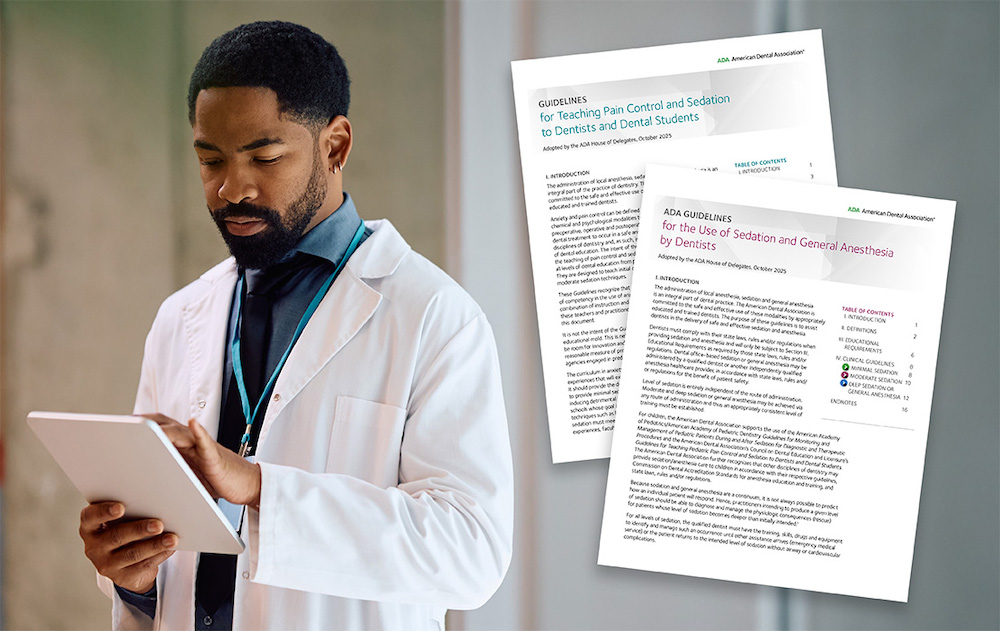
The ADA Guidelines for the Use of Sedation and General Anesthesia by Dentists include updated American Society of Anesthesiologists physical status and fasting recommendations, more precise documentation for weight-based dosing, and the addition of body mass index to baseline vital signs. The guidelines also recommend supplemental oxygen for moderate sedation through general anesthesia and clarify acceptable delivery systems. New expectations emphasize education, emergency preparedness and documented protocols with regular training drills.
The updated ADA Guidelines for Teaching Pain Control and Sedation to Dentists and Dental Students reflect current Commission on Dental Accreditation standards and outline essential educational requirements for minimal and moderate sedation.
Both guidelines are available as resources to state dental boards as they determine education and competency regulations.
Guideline development was led by the ADA Council on Dental Education and Licensure’s Anesthesiology Committee. In addition to the ADA, members of the following organizations contributed to this work: the Academy of General Dentistry, American Academy of Pediatric Dentistry, American Academy of Periodontology, American Association of Oral and Maxillofacial Surgeons, American Dental Society of Anesthesiology, American Society of Anesthesiologists and American Society of Dentist Anesthesiologists.
“It is encouraging to see all involved organizations come together, reach consensus and develop updated anesthesia guidelines that will better serve our profession and, most importantly, our patients,” said Brian J. Howe, D.M.D., chair of the Anesthesiology Committee.
For children, the 2025 ADA House of Delegates directed the Council on Dental Education and Licensure to begin developing pediatric guidelines for the use of sedation and general anesthesia. The ad hoc committee formed for this purpose is composed of experts from the council, Academy of General Dentistry, American Academy of Pediatric Dentistry, American Academy of Periodontology, American Association of Oral and Maxillofacial Surgeons, American Academy of Pediatrics, American Dental Education Association, American Dental Society of Anesthesiology, American Society of Anesthesiologists and American Society of Dentist Anesthesiologists. Work continues to progress.
Until that work is adopted, the ADA supports the use of the American Academy of Pediatrics/American Academy of Pediatric Dentistry’s Guidelines for Monitoring and Management of Pediatric Patients Before, During, and After Sedation for Diagnostic and Therapeutic Procedures and the Council on Dental Education and Licensure’s Guidelines for Teaching Pediatric Pain Control and Sedation to Dentists and Dental Students. The ADA also recognizes that other dental disciplines may follow their own respective guidelines, CODA standards and state regulations when providing sedation and anesthesia care to children.
The updated guidelines and additional information about sedation and anesthesia for dental professionals are available at ADA.org/sedation.