ADA urges EPA to strengthen scientific rigor in fluoride health assessment
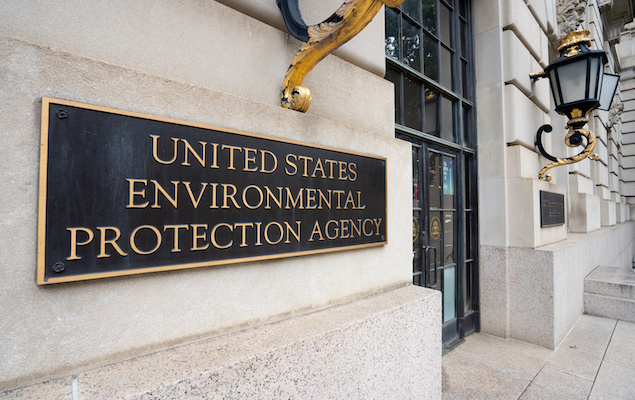
The ADA urged the Environmental Protection Agency to strengthen the protocols it intends to follow in its accelerated review of potential health effects of fluoride in drinking water, according to a Feb. 25 letter to the agency.
President Richard Rosato, D.M.D., and Interim Executive Director Elizabeth Shapiro, D.D.S., J.D. applauded the agency for expressing a commitment to the principles of “Gold Standard Science” but raised concerns about the EPA’s proposed methodology and reliance on certain “consensus hazard conclusions.”
“Relying on such documents as ‘consensus hazard conclusions’ without questioning or challenging the findings is a clear violation of the administration’s Gold Standard Science tenets,” the ADA wrote.
Specifically, the ADA questioned the EPA’s decision to leverage conclusions from assessments by entities such as the National Toxicology Program, the European Food Safety Authority and Health Canada rather than re-reviewing the full body of primary literature. The letter notes that EPA’s own legal arguments have described a recent National Toxicology Program report as “incomplete and not reflective of the best available science.”
The ADA’s comments follow a Jan. 22 EPA press release announcing the agency would undertake a “fast-track effort” to explore any potential health effects of fluoride exposure on childhood development and maternal and infant health. The press release stated that EPA “will not prejudge any outcomes of the assessment.”
Drs. Rosato and Shapiro outlined several recommendations for the EPA’s fluoride assessment. They urged the EPA to re-review the literature underlying cited consensus documents; include studies that question or refute associations between fluoride and neurodevelopmental effects; differentiate between mild and severe dental fluorosis; and incorporate additional subject-matter expertise, including a clinical psychologist or psychometrician experienced in pediatric IQ testing.
They also recommended that the EPA enlist the National Academies of Sciences, Engineering, and Medicine to conduct an independent peer review of the final report. The letter emphasizes that community water fluoridation has been practiced in the country for more than 75 years and references the Centers for Disease Control and Prevention recognition of water fluoridation as one of the 20th century’s major public health achievements.
“As a matter of scientific integrity, we note that routine exposure to fluoride concentrations over 1.5 mg/L are not germane to conversations about community water fluoridation in the United States,” Drs. Rosato and Shapiro wrote. “We look forward to working with EPA on any refinements to its preliminary study assessment and literature review.”