100 years of dental standards
ADA work shapes safe, reliable practice of dentistry



The history of dental standards in the U.S. dates back to World War I, when the military needed to buy large quantities of dental materials to address the “woeful state of soldiers’ teeth.”
In 1917, the surgeon general of the U.S. Army tasked the National Bureau of Standards with spearheading research on dental amalgam — research that would eventually lead to the development of the first American Dental Association standard in 1926 as well as dental materials that were stronger, longer lasting and more durable than in the past.
One hundred years and hundreds of national standards later, the ADA Standards Program continues to contribute behind the scenes to the safe and reliable practice of dentistry and the advancement of the dental profession.
“The trusted art and science of dentistry would not be possible without the rigor of ADA standards supporting the safety, quality and efficacy benchmarks that our profession demands, and the public relies upon,” said ADA Executive Director Nader A. Nadershahi, D.D.S., M.B.A., Ed.D. “As an Association, we proudly reflect on a century of excellence and embrace a promising future leading the advancement of standards in dentistry.”
What began with dental amalgam in the early 20th century soon expanded to other dental materials. By 1928, the ADA officially entered into a collaboration with the National Bureau of Standards, now the National Institute of Standards and Technology. Today, that small group of ADA and National Bureau of Standards scientists has expanded to more than 500 expert volunteers representing dental practitioners, industry, government and academia.
Those volunteers make up over 100 working groups charged with developing dental standards on various materials, products, processes, procedures and technologies, including restorative and orthodontic materials, prosthodontics, terminology, instruments, infection prevention, equipment, oral hygiene, implants, computer-aided design and manufacturing, forensics, data structure and exchange, and artificial intelligence and knowledge management.
One of those volunteers is Kenneth Aschheim, D.D.S., who has been involved with the program for 20 years and is now the chair of the ADA Standards Program Oversight Committee.
“Early on, I, like most of the volunteers, realized that this work really matters,” he said. “Standards are not always the most visible part of dentistry, but they help move the profession forward in a very practical and lasting way.”
ADA standards not only set performance and safety requirements but also test methods to ensure those requirements are met. In 2000, the ADA officially became an American National Standards Institute-Accredited Standards Developer, meaning its processes must meet rigorous requirements for openness, balance and consensus.
“A voluntary consensus process means no single person decides what the standard should say,” Dr. Aschheim said. “Different viewpoints are brought to the table, the language is discussed carefully, and the final result reflects broad agreement. I think that is what gives the standards their credibility and strength.”
Established in 1918, ANSI serves as an impartial national body to coordinate standards development and approve national consensus standards. ANSI accreditation allows ADA standards to become formal American National Standards upon which clinicians, manufacturers, regulators and payers can rely.
The Food and Drug Administration uses recognized consensus standards — such as those developed by the ADA — when evaluating products for the U.S. market because they include already established test methods, safety criteria and performance benchmarks. Through a formal recognition program, FDA experts evaluate standards developed by external standards organizations, recognize them in whole or in part, and maintain them in a public database. Manufacturers can submit documentation affirming their products meet applicable recognized standards, enabling a more efficient, consistent and predictable regulatory review process.
“As we celebrate 100 years of ADA standards, we recognize the profound impact they have had on the practice of dentistry. For a century, standards have provided a trusted framework that supports clinical decision-making, promotes consistency in patient care, and helps ensure the highest levels of safety and quality,” said Jennifer Thompson, D.D.S., chair of the ADA Council on Dental Practice. “By translating evidence and expertise into practice, ADA standards empower dental professionals to deliver better outcomes for their patients and strengthen confidence in the profession. This centennial milestone is an opportunity to honor that legacy while looking ahead to the continued advancement of oral healthcare.”
The ADA’s work in dental standards extends to the global stage as well. Internationally, it is responsible for providing the official U.S. position to the International Organization for Standardization, or ISO, Technical Committee 106 on Dentistry, the global forum that sets international dental product standards.
This role means the ADA helps to shape global requirements, ensuring that international standards reflect U.S. clinical practice and regulatory expectations. The ADA’s participation also helps to enable global trade of dental products because U.S. manufacturers have easier access to foreign markets and can avoid duplicative testing and documentation when they follow ISO standards. This provides dental professionals and consumers with greater choice, lower prices and less frustration when they reach for a product or interact with the healthcare system because the framework for safety, efficacy, interoperability and consistency has been set for them.
The ADA also ensures that U.S. dental needs are represented and heard at the ISO Technical Committee 215 on Health Informatics, working toward a world where patient health information can be exchanged safely and quickly.
Dental standards have come a long way since 1926, but they continue to safeguard patients and support innovation at both the national and international levels. As dentistry becomes more digital, data driven and integrated with medicine, the same principles that guided material specifications a century ago — safety, reliability, evidence and consensus — now underpin standards for electronic records, secure data exchange and the performance of new technologies.
“The sign of a successful standard is if it goes unnoticed, working quietly in the background to help dentistry function safely, consistently and reliably,” Dr. Aschheim said. “That structure is becoming even more important as dentistry moves into artificial intelligence, digital imaging, data exchange and other rapidly changing technologies, helping to ensure that innovation advances responsibly, with appropriate attention to safety, reliability and patient benefit.”
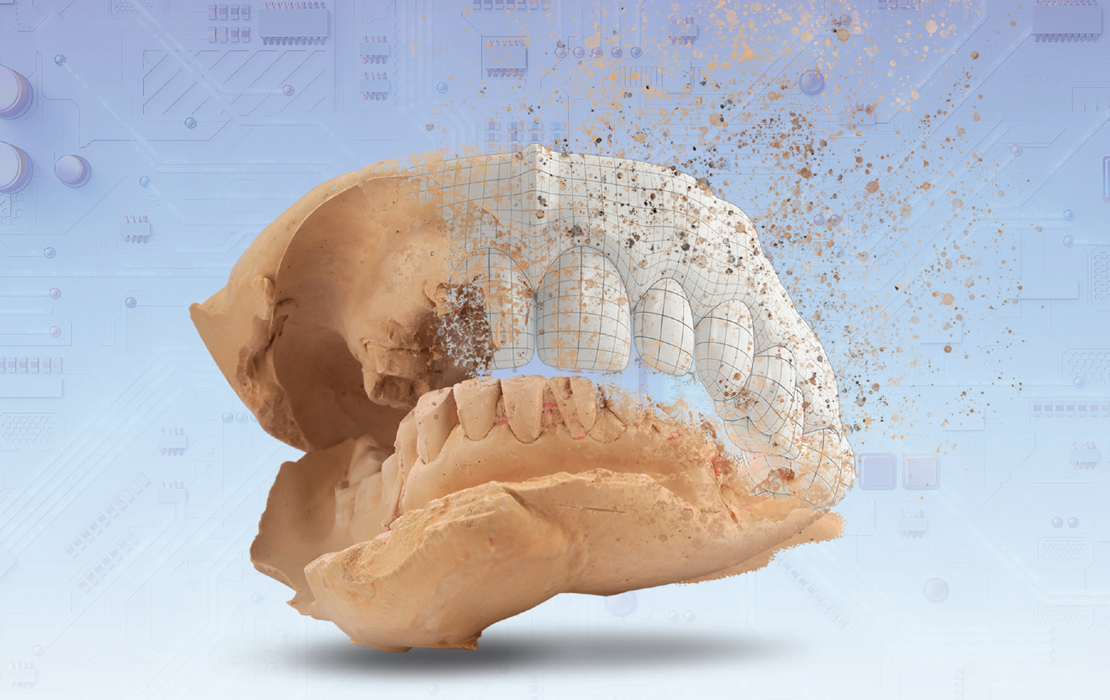
Some ADA standards projects in the works cover emerging technologies such as AI and 3D printing, and others will address efficiency needs by standardizing data content for information exchange. However, 100 years after that first standard on dental amalgam, work still continues on fundamentals such as amalgam separators, dental materials, instruments, toothbrushes and toothpaste.
“Without standards, dentistry would face constant roadblocks and avoidable costs,” Dr. Thompson said. “The ADA Standards Program has long ensured that the U.S. dental community can rely on high-quality, standardized products and systems — delivered when and where they are needed most.”