May JADA evaluates ability of automated testing platform to detect HPV in saliva
Other articles discuss obstructive sleep apnea, water fluoridation
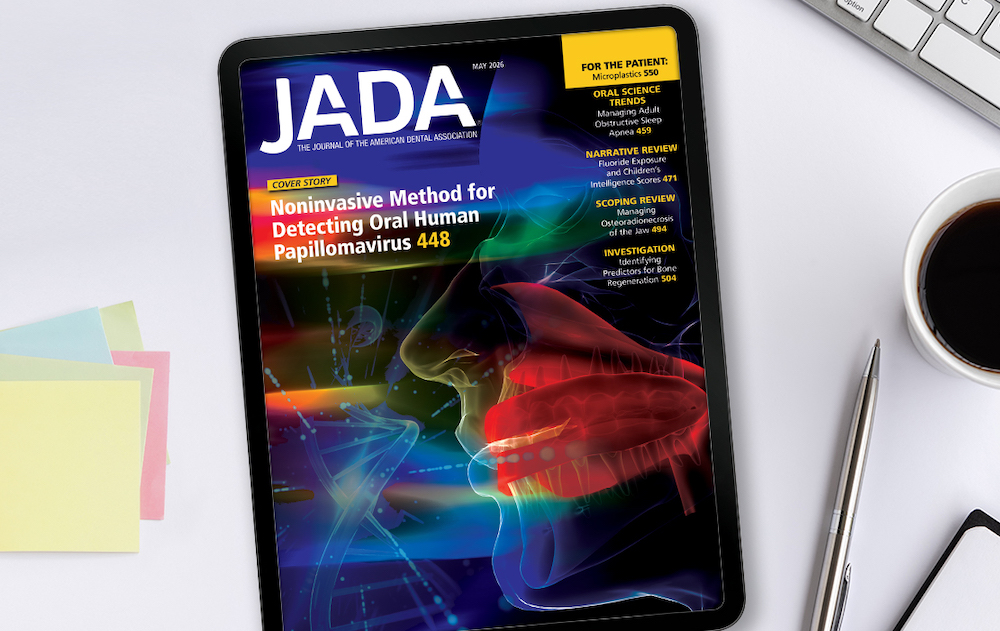
A study published in The Journal of the American Dental Association compared the HPV detection abilities of an automated testing platform and conventional testing techniques requiring DNA extraction and technical expertise.
The researchers adapted the GeneXpert system — a fully automated quantitative polymerase chain reaction-based testing platform designed primarily for cervical cancer screening using vaginal swabs — for HPV testing using salivary oral rinse samples.
“Salivary Oral Rinse Offers a Noninvasive Method to Detect Oral Human Papillomavirus Infections on the GeneXpert System,” published as the cover story of the May issue of JADA, included 67 participants consisting of patients suspected of having any type of head and neck cancer and people at a higher risk of acquiring HPV infections. The researchers tested the participants’ salivary samples for HPV type 16 using the GeneXpert system and extracted genomic DNA from the same samples and analyzed it using conventional quantitative real-time polymerase chain reaction-based techniques.
Those techniques identified 43 samples as HPV-16 positive and 24 as HPV-16 negative. Of these, the GeneXpert system correctly classified 31 as positive and 24 as negative but failed to detect HPV-16 in 12 positive samples, giving it a sensitivity of 72.09%, a specificity of 100% and a concordance of 82.09% with quantitative real-time polymerase chain reaction. The researchers suggested that increasing sample volumes could improve GeneXpert’s sensitivity.
“These findings support its potential integration into decentralized screening workflows, although validation in larger, diverse cohorts will be essential to confirm its clinical usefulness and scalability,” the authors said in the study.
Other articles in the May issue of JADA discuss adult obstructive sleep apnea, community water fluoridation and Medicaid-covered dental surgeries in children with disabilities.
Every month, JADA articles are published online at JADA.ADA.org. ADA members can access JADA content with their ADA username and password.