ADA Scientific Session kicks off with fireside chat on translating science into practice
Meeting continues through Oct. 10 in Indianapolis
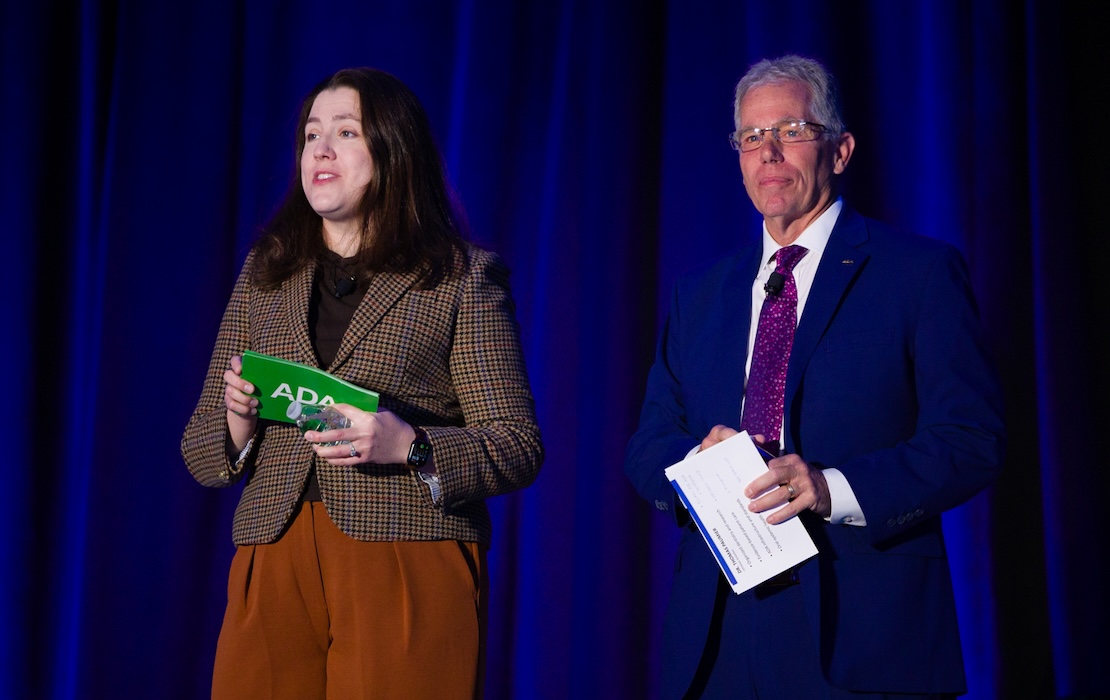
The ADA 2026 Scientific Session kicked off Oct. 8 with the Science Into Practice Fireside Chat, a conversation exploring how emerging research and technology could influence dental practice and patient care.
The panel began with opening remarks from ADA President Richard Rosato, D.M.D.; President-elect Thomas Paumier, D.D.S.; and Executive Director Nader Nadershahi, D.D.S., M.B.A., Ed.D.
Dr. Rosato highlighted the role of Oral Health 2050 in helping the dental profession take the lead in determining the future of oral healthcare. The goal of the strategic initiative is to develop a roadmap for dentistry’s next 25 years, with a particular focus on artificial intelligence and technology, wellness, payment models, and delivery of care.
“How does dentistry, how does oral health, fit into [this artificial intelligence movement], and how can we shape how technology will help us be more effective and more efficient as practitioners, as people in the benefit space, people in the delivery space, people in the wellness space and people in our science space? How can we best shape the future of our profession?” Dr. Rosato said.
Dr. Paumier discussed the importance of the ADA being the driving force behind dentistry’s future, rather than leaving those decisions to policymakers. Dr. Nadershahi, too, emphasized the work that only the ADA can do.
“For us at the ADA, what we want to do is we want to make sure we’re the source of information, we’re the voice for the profession,” Dr. Nadershahi said. “Whether it’s on Main Street, whether it’s on Wall Street or it’s on Capitol Hill, our leaders are coming together to provide the very highest standards for the patients and the communities that we’re privileged to serve, so the excitement really is around that. And that’s what the ADA can do, that only the ADA can do, with the strength of all of our members.”
After the opening remarks, Kayla Klingensmith, D.M.D., chair of the ADA New Dentist Committee, led the fireside chat with Dr. Paumier as one of the panelists. Mark Lingen, D.D.S., Ph.D., professor of pathology at the University of Chicago Medicine, and Tim Wright, D.D.S., editor-in-chief of The Journal of the American Dental Association, served as the other panelists.
During the conversation, the panelists highlighted emerging research into oral-systemic connections, discussing how oral health is tied to inflammation and disease.
“The oral cavity is attached to the human body, and so what happens in the oral cavity affects what happens throughout the rest of the body,” Dr. Lingen said. “While that may not be the primary focus of what a dentist does on a regular basis with each singular patient for each dental operative procedure, it’s important to have that mindset that I’m treating the human being, I’m not treating No. 6. It’s all related.”
The panelists also addressed how dentists can thoughtfully embrace new technology, emphasizing the importance of validation.
“You need to be informed, so do your due diligence and don’t just accept what a sales rep says or what you see on TikTok or what you see on the blog,” Dr. Wright said. “Go out and do a little research and challenge the sales rep and say, ‘Other than the abstract from your company that you presented, what other data do you have?’”
The panelists pointed to the ADA’s clinical practice guidelines and dental standards as sources of validated evidence dentists can use to make informed decisions about the way they practice dentistry and the technology they use.
Dr. Paumier provided the example of how dentists don’t need to worry about a bur flying out of a handpiece because both the bur and the handpiece need to meet standards set by the ADA.
“I want to know that the things that I do for my patients are safe and effective,” Dr. Paumier said. “And we don’t think about standards that the ADA sets because they work and we don’t have problems.”
Dr. Klingensmith and the panelists also addressed what dental practice owners should consider when deciding whether or not new technology is worth the cost of implementation.
Dr. Paumier said he asks himself what the new technology is replacing and whether it will help him do that procedure or task better and at a lower cost to patients.
“As a clinician, you have to make those judgments because you can’t have it all,” he said. “As I’ve said at the ADA and in general in our practices, we can do anything we want; we just can’t do everything we want. And so you have to prioritize: Where’s the biggest impact for me?”
The Scientific Session is taking place Oct. 8-10 at the Indiana Convention Center in Indianapolis.