October JADA examines how human virome research could impact dentistry
NIH-funded center at UCLA focuses on oral-gut-brain axis
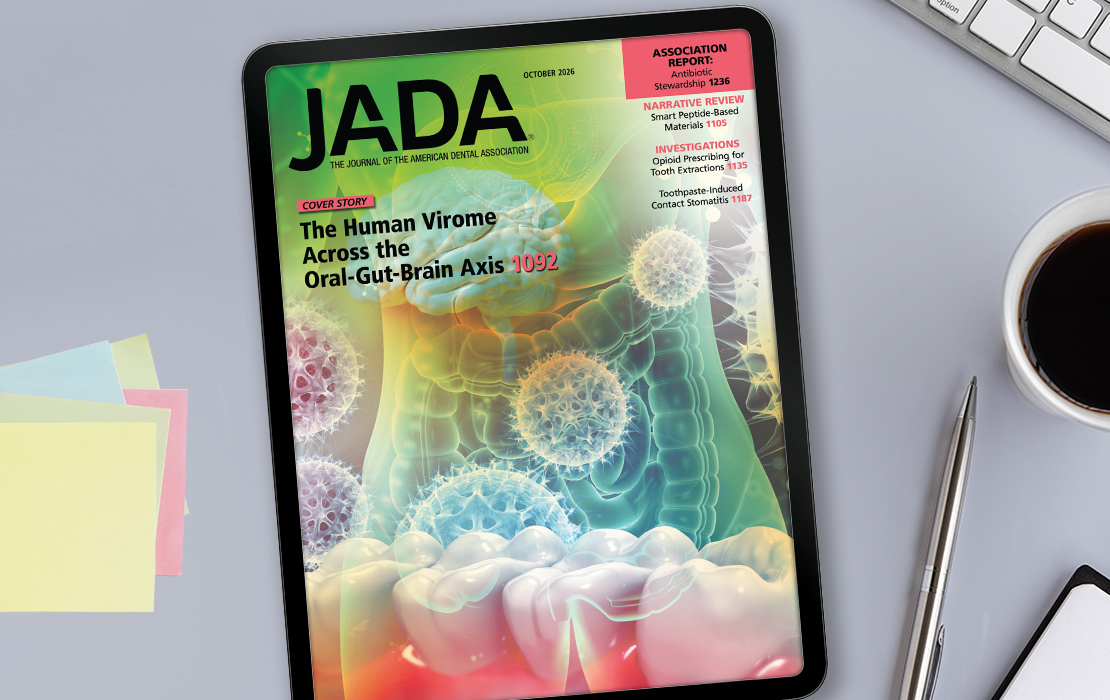
Despite the estimated 380 trillion viruses that exist within the body, little is known about the human virome. New research from the National Institutes of Health Human Virome Program is aiming to change that.
“Oral Virome in Health and Disease” — the cover story of the October issue of The Journal of the American Dental Association — discusses what’s known about the human virome across the oral-gut-brain axis and what those intrabody connections could mean for oral health and dentistry. It also addresses challenges to understanding the oral virome.
The article was written by researchers from the UCLA School of Dentistry, which received a $20.6 million grant from NIH — the largest NIH grant ever awarded to the dental school — to establish one of five nationwide Human Virome Characterization Centers. The centers are conducting research as part of the Human Virome Program, and the UCLA site is the only one headquartered at a dental school.
“The goal of UCLA’s Human Virome Characterization Center is to define what a healthy human virome looks like across the lifespan, health span and in diverse populations, especially to understand how viruses interact with the oral cavity, gut, brain, immune system and microbiome,” said Yvonne Hernandez-Kapila, D.D.S., Ph.D., UCLA School of Dentistry associate dean of research and principal investigator for the grant. “By establishing this baseline, researchers hope to identify virome changes that contribute to disease and develop new approaches for disease prediction, prevention and precision health.”
Understanding the healthy oral virome could reveal how oral viruses influence periodontal disease, dental caries, inflammation and immune function and clarify how oral health is connected to whole-body health, Dr. Hernandez-Kapila said.
This could potentially lead to the improved ability to identify early biomarkers of oral and systemic disease before symptoms appear, positioning dentistry as a key contributor to precision medicine by using saliva and oral samples to monitor health and disease risk, she said.
This research could also lead to more personalized preventive and therapeutic strategies for treating patients based on their oral microbiome and virome profiles as well as the possible oral delivery of therapeutics such as antiviral agents or vaccines, Dr. Hernandez-Kapila said.
“In short, this research could transform the oral cavity from simply a site of disease detection and treatment into a powerful window for understanding and promoting overall human health,” she said.
The cover story is the latest addition to JADA’s Oral Science Trends series, which consists of invited reviews that explain where current biomedical and clinical sciences are leading to impactful changes in dentists’ ability to provide care and improve health.
“Viruses are the most abundant and diverse biological entities on Earth, and trillions live in our bodies without causing disease while interacting with our cells and impacting the microbiome, health and development,” JADA Editor-in-Chief Tim Wright, D.D.S., said. “This JADA article is written by well-known leaders in the field and will help readers understand the importance of viruses in human health and disease.”
Other articles in the October issue of JADA discuss smart peptide-based materials, opioid prescribing for tooth extractions and toothpaste-induced contact stomatitis.
Every month, JADA articles are published online at JADA.ADA.org. ADA members can access JADA content with their ADA username and password.