My View: The future of dentistry isn't more technology. It's more humanity.
Every dentist remembers the moment they decided to become one.
For some, it was watching a loved one receive extraordinary care. For others, it was the perfect intersection of science, artistry and medicine.
For many of us, it was something much simpler: We wanted to help people. We wanted to relieve pain. We wanted to make someone's life a little better than we found it.
Somewhere between graduation and practice ownership, however, that original calling can become buried beneath production reports, insurance claims, staffing shortages, rising overhead, student loans, continuing education requirements and the endless pressure to do more.
Not because we forget why we became dentists, but because the modern practice of dentistry competes relentlessly for our attention.
The American Dental Association has recognized this reality. According to the ADA's 2021 Dentist Health and Well-Being Survey, the percentage of dentists diagnosed with anxiety had more than tripled from 5% to 16%, while 13% reported depression. More recently, ADA surveys have found that more than 90% of dentists report career-related stress, and more than 40% say they feel defeated, want to quit dentistry, or simply don't want to go to work at least monthly.
When conversations about burnout arise, the solutions often sound familiar: practice more self-care, exercise more, meditate, take a vacation, do yoga.
As someone whose life has been profoundly shaped by yoga, mindfulness and wellness practices, I believe those tools are deeply valuable. But I also believe we've unintentionally created another burden, another item on an already overflowing checklist, another reason for dentists to feel like they're falling behind.
"Now I'm not only behind on my charts, I'm behind on my wellness, too."
I don't think that's the answer. In fact, I think the opposite may be true.
Perhaps we don't need more; perhaps we need less. Less noise. Less rushing. Less measuring our lives by metrics that can never satisfy us.
Author Michael Easter describes what he calls our scarcity brain — the part of our nervous system designed to constantly search for what is missing. That instinct kept our ancestors alive. Today, it often keeps us chronically dissatisfied.
In dentistry, scarcity can become our professional operating system. The margin could be better. The schedule could be fuller. Collections could be higher. The team could be stronger. The practice could be larger. The continuing education never ends. The checklist is endless.
Psychiatrist Anna Lembke, M.D., describes a similar phenomenon in "Dopamine Nation." Achievement provides a temporary reward before quickly becoming our new normal. Yesterday's dream becomes today's expectation, and our attention immediately shifts toward the next milestone.
Many of us unknowingly spend years chasing fulfillment in places our brains were never designed to find it.
Burnout has real and complex causes, many of them systemic and beyond any individual dentist's control. But I have come to wonder whether one piece of the puzzle receives too little attention: our growing disconnection from the reason we work in the first place.
I didn't understand this when I graduated dental school in 2014, but that very same year I went on a dental aid mission to Guatemala with the belief that I was going to change lives. Instead, the people there changed mine.
The villages I visited were materially poor by almost every Western standard. Yet they possessed something I didn't. There was an ease to life.
Children played outside together. Neighbors wandered freely between homes. People lingered in conversation. There was curiosity, laughter, presence.
I remember asking myself a question that has never left me: “Why do they seem happier than I am?” That question quietly transformed my life.
It eventually led me toward yoga, meditation, breathwork, neuroscience, psychology and the study of attention.
At first, I wondered if these practices were pulling me away from dentistry. I often felt like I was falling behind and not doing enough to the point of burnout myself.
Looking back, I realize that path was actually preparing me to practice dentistry more fully.
The more present I became, the more I fell in love with my profession. Patients stopped feeling like appointments; they became people. Listening became just as important as diagnosing. Treatment became relationship. The work became more meaningful.
Years later, those lessons inspired the creation of Revive Mission, where dentists travel to provide care alongside local clinicians while intentionally reconnecting with the purpose that first called many of us into healthcare.
Initially, I believed Revive Mission existed to help underserved communities. Every mission since has taught me something different. Healing never flows in only one direction.
One of the first people to teach me that was a shy and incredibly hard-working dental technician assistant. His name was Gustavo. When our team arrived in the Dominican Republic one stormy evening, we decided to leave thousands of dollars of mobile dental equipment covered beneath tarps until morning.
At sunrise, we discovered Gustavo asleep beneath the equipment. No one had asked him to guard it. He simply refused to leave it unattended.
Later, we learned that Gustavo had once been homeless and addicted to drugs before our lead technician believed in him enough to offer him a second chance. Watching his gratitude, humility and unwavering commitment transformed every clinician on that trip.
We thought we had traveled there to serve him, but in many ways, he became one of our greatest teachers.
On a more recent Revive Mission, we saw a 19-year-old traveler named Cassandra who came to our clinic with a fractured front tooth after a hiking accident. Treating the tooth would have been easy.
Instead, we paused. We listened. As her story unfolded, we learned she had recently become estranged from her family and was traveling alone. Yes, we restored her smile. But later that evening, after joining our community yoga session and conversation, she shared something none of us expected. She was going to call her family. She wanted to begin repairing those relationships.
We restored a tooth. She began restoring her life.
Again and again, I've witnessed the same pattern. Healing spreads. It moves through patients, families, communities, dentists and volunteers. And somewhere along the way, I began to understand that our profession has never been solely about restoring teeth. We relieve pain. We restore function. We return confidence. We sit beside frightened people in vulnerable moments and help them feel safe again.
If that isn't healing, what is?
Perhaps the future of dentistry won't be defined by faster scanners, stronger materials or smarter artificial intelligence. Those innovations matter, but none of them will ever replace the moment when a frightened patient realizes they are safe, or when a colleague rediscovers why they chose this profession, or when a young volunteer discovers that generosity has the power to awaken something long forgotten within themselves.
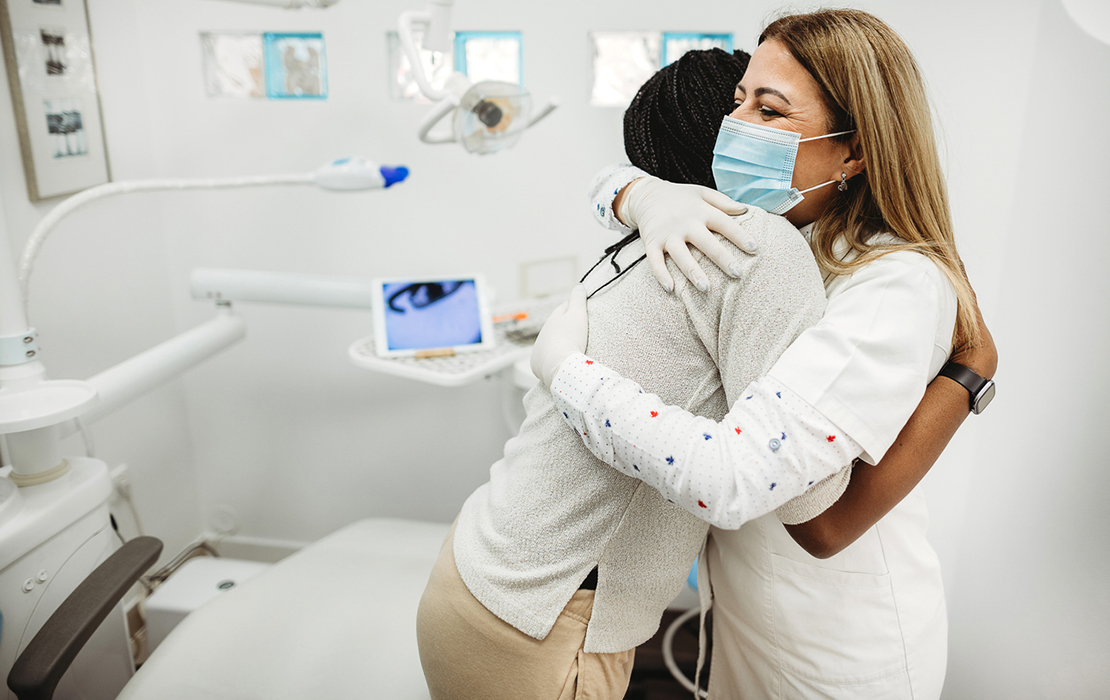
I don't believe dentists need another obligation added to their calendars. I don't believe the solution to burnout is simply squeezing in one more wellness practice. I believe the invitation is much simpler: Slow down enough to notice the human being sitting in your chair.
Protect your attention. Protect your curiosity. Protect the reason you entered this profession in the first place.
Because perhaps purpose isn't something we need to find; perhaps it's something we need to stop rushing past.
Before we became providers...
Before we became business owners...
Before we became technicians...
We were called to become healers.
And healing has never been a procedure. It has always been a relationship.
About the author
Dr. Cristian Pavel is a Chicago-area dentist, practice owner, wellness speaker, yoga teacher and founder of Revive Mission, a dental outreach initiative combining service, connection and clinician well-being. For more information visit dentalyogis.com.