Integrating the Entire Dental Practice
How connected dentistry applications reach beyond CAD/CAM
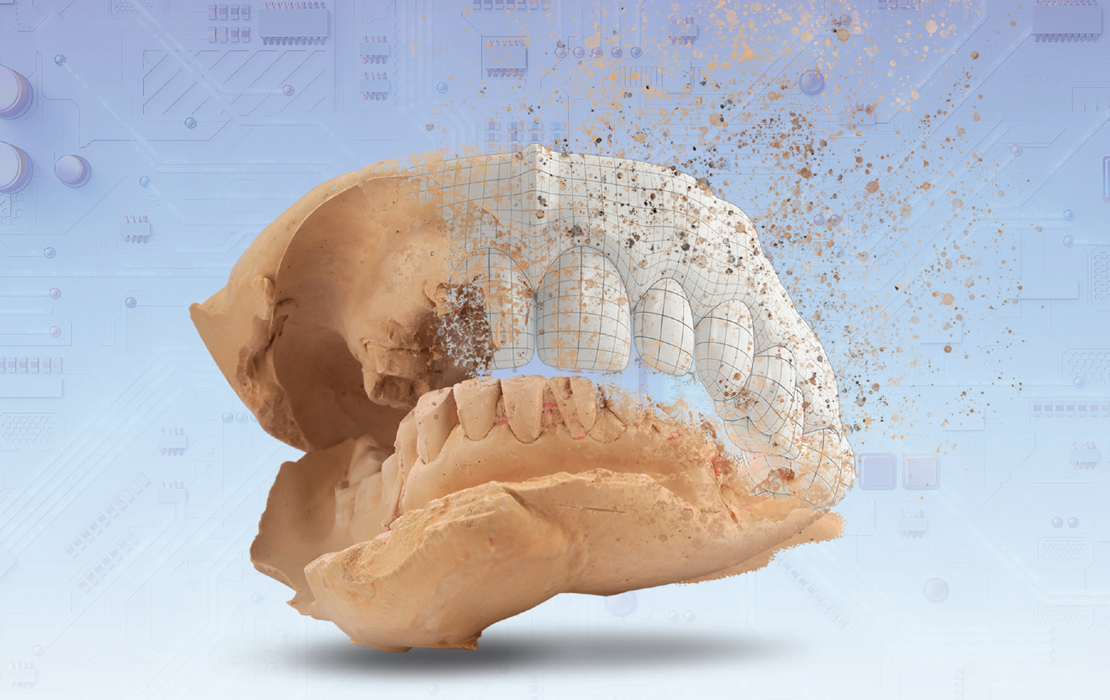
When dental professionals hear the term connected dentistry, many picture CAD/CAM systems, intraoral scanners, and same-day restorations. But industry leaders say the concept reaches far beyond that. Connected dentistry isn’t just about digital impressions or milling—it’s about integrating every corner of the practice, linking data, devices, and people so information flows freely, helping to improve efficiency and patient outcomes.
Describing connected dentistry as unlocking the full potential of the digital information in a dental practice, Dr. Rainer Seemann, Chief Clinical Officer at Dentsply Sirona, says true benefits are realized when a practice can combine the information in radiographs, 3D imaging, patient records, and other digital files in a single interactive platform.
A True Ecosystem of Care
For Arjan de Roy, Group Vice President, Essential Dental Solutions at Dentsply Sirona, connected dentistry represents the next step in digital integration—one that benefits every type of dental practice, from generalists to specialists like endodontists or orthodontists.
“Connected dentistry is really about linking diagnostics and workflows in a seamless way,” de Roy explains. “It’s the next step in what we’ve always tried to do: make procedures easier and more consistent for clinicians.”
Both de Roy and Dr. Seemann emphasize that while CAD/CAM remains an important example of digital integration, restoration is only the final step in most procedures. The connected approach starts much earlier—with imaging, planning, and communication—and continues through treatment and follow-up.
Dentistry will always be a hands-on profession. “Somebody still has to do the dentistry,” Dr. Seemann notes. He likens it to air travel: no matter how digital the journey becomes, you still have to sit in the airplane seat. But today, every step leading up to that flight—booking, check-in, meal selection—is handled digitally, creating a seamless travel experience with fewer unknowns and greater efficiency.
The same, he says, should be true for dentistry. The clinical procedure—the “airplane seat”—is physical, but everything else can be digitally supported and connected. From diagnosis and case planning to lab communication and patient education, each touchpoint can be streamlined through digital integration.
A Root Canal Example: Linking Every Step
Dr. Seemann points to endodontics as an ideal illustration of how connected digital technology can improve a physical workflow. “We do endo procedures because we want to place a restoration on top of it, because that’s what people want. [Patients] want a smile.”
In a connected ecosystem an endodontic procedure can be enhanced before, during, and after treatment. Prior to treatment, when the patient is being diagnosed, the full range of 2D and 3D radiographic images can be assessed together using artificial intelligence (AI) to quickly flag challenging anatomy or suggest when a tooth is nonrestorable. This can save time ahead of treatment, aid in decisions of whether to treat or refer out a patient, and make communication between a GP and specialist more efficient.
During treatment connected endodontic motors and file systems can automatically track canal lengths and log file use, automatically triggering reorder reminders just before a file reaches its expected lifespan. Following the treatment, cloud-based communications allow the specialist and the referring GP to instantly share patient records, closing the loop for follow-up care.
“The magic happens when this is all in one place and not sitting in different areas,” Dr. Seemann says. “That’s fundamentally what we are working on.”
Building a Foundation for Connection
For practices looking to begin their journey toward connectivity, de Roy recommends starting with two key tools: a CBCT unit and an intraoral scanner. Together, they open the door to diagnostic precision, digital workflows, and create a foundation for future integration.
But compatibility is essential. An analogy to travel is apt, de Roy says, agreeing with Dr. Seemann. A traveler might use different apps to book a flight, a hotel, and a car, but with a smartphone and cloud-capabilities to serve as a hub, all of these apps communicate with each other, allowing for a smooth travel experience. Connected dentistry should be the same with your scanner, imaging system, planning software, and lab being able to ‘talk’ to each other, de Roy says.
That’s where platforms like Dentsply Sirona’s DS Core come in, serving as a central hub for data, imaging, and collaboration. Practices can manage cases, share files securely, and access cloud-based tools without worrying about software compatibility or operating system updates.
Efficiency That Impacts Every Appointment
When systems communicate, the effects ripple through every appointment. “Efficiency goes up significantly,” de Roy says. “You can shorten the visits. You can do more in the same visit. Chair time can be reduced, and that’s also not only because the procedure gets shorter, but also because you can work together as a team.”
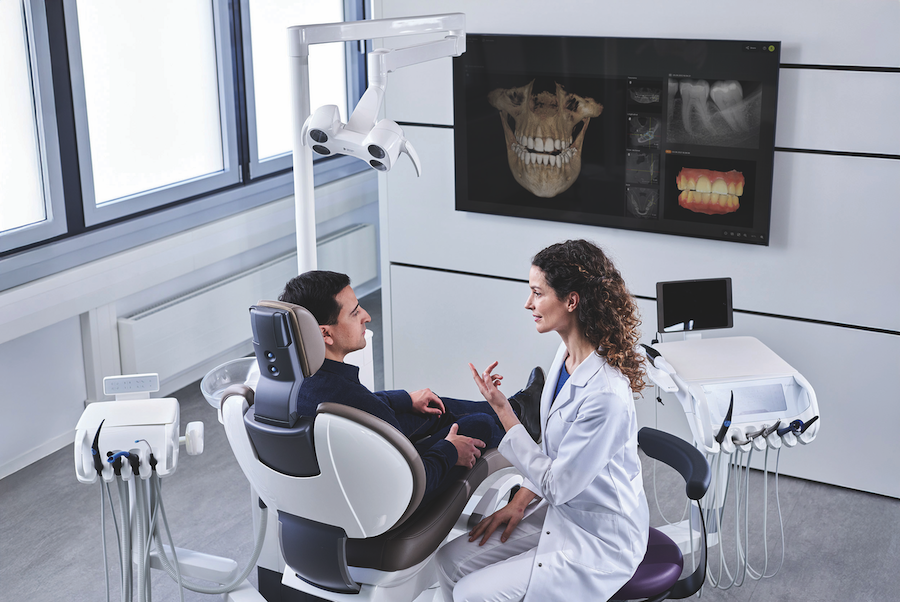
For patients, that connectivity improves both their experience and their confidence. Seeing their scans and treatment plans on-screen helps them understand their options and builds trust. Patients also notice when things are more efficient and consistent. “When things become more predictable, the patients see the results immediately, and that will drive them to decide for a digital practice,” de Roy adds.
While restorative and endodontic examples show the clinical benefits of connection, Dr. Seemann believes preventive dentistry may see the biggest long-term impact.
“If a hygienist scans every patient at every visit, suddenly you don’t just have an intraoral scanner—you have a time machine,” he says. “You can compare scans over years, see subtle changes, and even predict trends before problems appear.”
Paired with AI analysis, longitudinal data could move preventive care from reactive to predictive, helping clinicians anticipate disease before it develops. While he notes this is not an application available today, connected platforms such as DS Core are the backbone needed to support this technology.
Both experts agree that connected dentistry doesn’t mean starting from scratch. Practices can begin small, digitizing a single workflow and expanding over time. Many modern systems are designed to integrate with existing equipment, allowing clinicians to enhance what they already do rather than replace it.
Connected systems require investment, but de Roy says the returns can be surprisingly fast. “When you think of connected dentistry not just as equipment but as a mindset—focused on efficiency, outcomes, and patient relationships—it becomes a growth engine.”
The Patient Connection and Beyond
Patients today expect connected experiences in every part of their lives, and dentistry is no exception. From cloud-based communications to integration with broader health monitoring trends, connected technologies are helping bridge oral health with whole-body wellness.
Ultimately, both experts envision a profession where every scan, radiograph, and patient record strengthens a collective intelligence across dentistry—supporting faster, more accurate, and more personalized care. The technology continues to grow, and dental practices can grow along with it.
“My recommendation would always be, don’t destroy what you’re doing, just add to it, see whether it adds efficiency, or a better clinical outcome, and then take it from there,” Dr. Seemann says.