
Achieving apical patency in nonsurgical endodontic retreatment
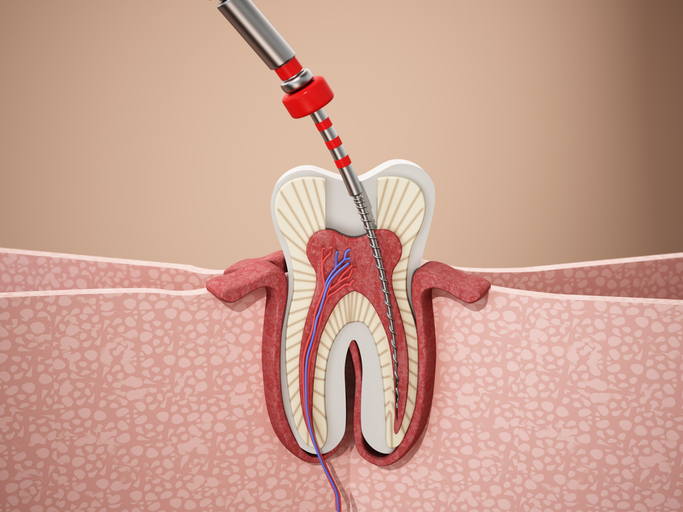
A novel endodontic material may improve apical patency in nonsurgical endodontic retreatment. Although sealers comprised of calcium silicate are favored during root canal therapy, the materials can obturate the root canals, and endodontists often face difficulties in their removal when performing nonsurgical root canal retreatment.
In an ex vivo study published in the Journal of Endodontics, researchers analyzed whether a novel bioceramic solvent could reestablish apical patency compared with sodium hypochlorite with or without adjunctive erbium-doped yttrium-aluminum-garnet laser activation in nearly 50 extracted single-rooted teeth. They used gutta-percha and calcium silicate to obturate the extracted teeth and applied the novel solvent and sodium hypochlorite after a period of 14 days following the removal of gutta-percha.
While the researchers found that apical patency was achieved in almost 100% of the root canals, the novel bioceramic solvent demonstrated greater efficiency, reaching apical patency in 57 seconds at the quickest time using a size 10 C-file versus 582 seconds at the longest time with sodium hypochlorite. The solvent’s effectiveness was notable without or without adjunctive laser activation.
The findings suggested that the novel bioceramic solvent could help improve the removal of calcium silicate during nonsurgical root canal retreatment.
Read more: Journal of Endodontics
The article presented here is intended to inform you about the broader media perspective on dentistry, regardless of its alignment with the ADA's stance. It is important to note that publication of an article does not imply the ADA's endorsement, agreement, or promotion of its content.