
Ancient dental caries treatment evidenced in Neanderthal molar
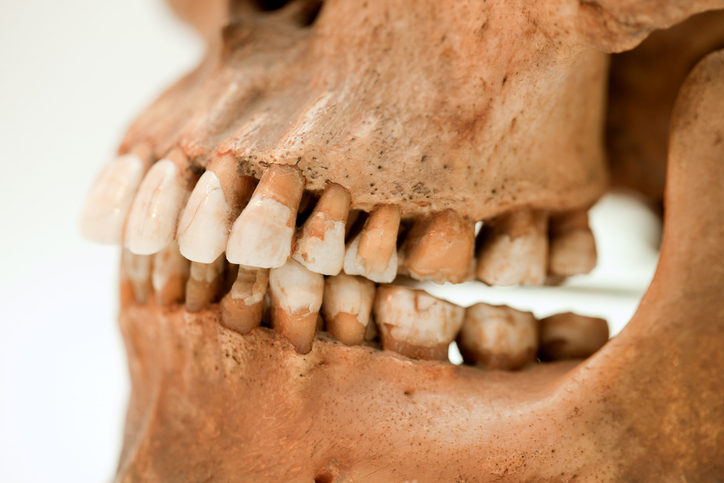
Researchers may have uncovered evidence of prehistoric dental care, possibly one of the earliest documented intentional interventions to remove dental decay.
In a study published in PLOS One, the researchers recovered a mandibular second molar specimen belonging to Homo neanderthalensis from the Chagyrskaya Cave in southwestern Siberia, Russia, about 59,000 years ago. On the occlusal surface, they noted a circular concavity that appeared to be artificial and occurring while the hominin was still living.
After performing macro- and microscopic, traceologic and microtomographic analyses and experimental verification, the researchers detected the implementation of a lithic perforator for the purposes of drilling and rotating to produce the initial concavity and also noted V-shaped grooves and striations at the microscopic level. They indicated that the manipulation of the tooth demonstrated the use of multiple tools, technical proficiency as well as the cognitive awareness of H. neanderthalensis to identify the source of pain and devise and execute the removal of carious dental tissue through controlled force application and effective debridement.
In a news article from The Washington Post, experts argued that the diagnostic capability, social support and trust displayed by H. neanderthalensis in this case pointed to the complex reasoning and causal thinking necessary to successfully complete the dental procedure. From a modern dentistry perspective, one expert, a retired dentist, proposed that the procedure was similar to a root canal, in which the H. neanderthalensis performing the drilling discovered two-thirds of the canals.
The findings suggested that the procedure transcended the self-medicating instincts seen in other nonhuman primates and could dismantle assumptions of the behavioral limitations of the H. neanderthalensis. The researchers emphasized that evidence of this type of procedure may narrow the cognitive divide between H. sapiens and H. neanderthalensis, aligning it with other cultural similarities between living and extinct human species and placing deliberate dental interventions about 45,000 years earlier in human history.
For more information, visit the ADA Oral Health Topic in Forensic Dentistry and Anthropology at ada.org.
Read more: PLOS One
The article presented here is intended to inform you about the broader media perspective on dentistry, regardless of its alignment with the ADA's stance. It is important to note that publication of an article does not imply the ADA's endorsement, agreement, or promotion of its content.