
Are you crisis ready? Building emergency funds
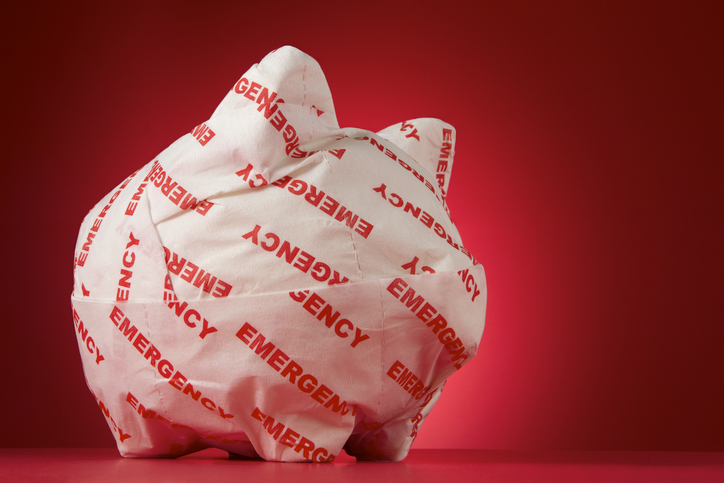
Experts provided tips individuals can use to build an emergency fund amid ongoing economic uncertainty.
While unexpected expenses can upend the budget, having an emergency fund can introduce preparedness and help individuals better weather life’s challenges, according to a news article from Forbes. Overall, the experts cited in the article recommended that individuals have enough in their emergency fund to cover three months of essential costs and that these finances are in an accessible account. However, because there are personal factors that affect the ability to save, they detailed that being aware of median emergency fund levels on the basis of age group can establish savings goals.
For instance, two surveys from the Federal Reserve revealed that 37% and 45% of those aged 18 to 29 years, 49% and 57% of those aged 30 to 44 years, 55% and 66% of those aged 45 to 49 years and 71% and 78% of those aged 60 years and older had an emergency fund to cover three months’ essential expenses and could afford an unexpected expense of $400, respectively.
The experts advised individuals in their 20s to begin consistently contributing at least small amounts of money toward an emergency fund; those in their 30s to establish emergency cash in their budget and attempt to build three to six months of funds; those in their 40s to aim to build emergency funds that can cover larger household disruptions such as job loss, medical expenses and home repairs; those in their 50s to maintain an emergency fund separate from retirement savings and maintain at least six months of emergency cash; those in their 60s to build emergency funds that can buffer the gap between retirement savings and income for between six and 12 months; those in their 70s to keep six to 12 months of emergency savings to protect liquidity; and those in their 80s and 90s to have practical access to their emergency funds.
Because emergency savings can be dependent on a multitude of factors — including income levels, contribution rates, account types, everyday living expenses and market conditions such as inflation — determining the appropriate amount to keep in an emergency fund may be critical to maintaining adequate coverage. The experts concluded that individuals looking to build their emergency funds should consider high-yield savings accounts, money market accounts or linked savings accounts.
Read more: Forbes
The article presented here is intended to inform you about the broader media perspective on dentistry, regardless of its alignment with the ADA's stance. It is important to note that publication of an article does not imply the ADA's endorsement, agreement, or promotion of its content.