
Aspects of caries identification with intraoral scanners
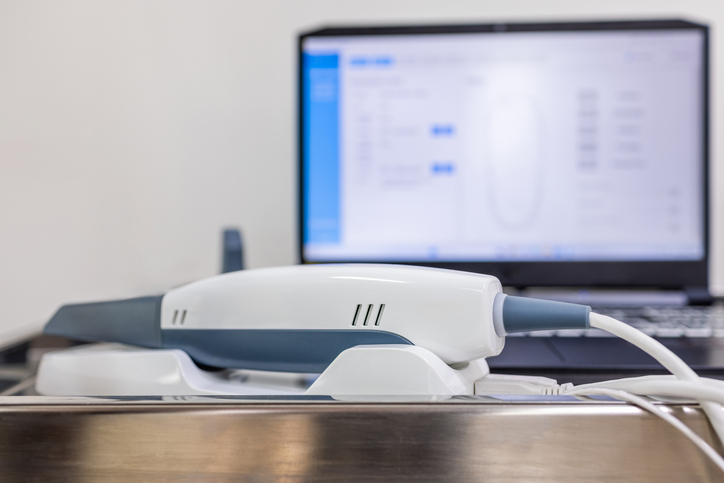
Intraoral scanners could aid in caries detection by achieving reproducible and objective results.
In a study published in BMC Oral Health, researchers examined the feasibility of intraoral scanners to detect dental caries by assessing needed image quantity, time efficiency and patient experiences among 78 patients with caries who completed questionnaires. Six of the patients underwent two scans to determine agreement among skilled operators.
The researchers noted that compared with scans of the mandible and primary teeth, more time and images were required to scan the maxilla and permanent teeth. The participants were more likely to experience discomfort when undergoing scans of the distal surfaces of the upper molars; however, an overwhelming majority of them reported that the scanning procedure was comfortable and the duration acceptable. Further, the researchers found that the inter-operator agreement for caries detection was similar.
The results suggested that intraoral scanners may be well tolerated and reliable in identifying dental caries.
Read more: BMC Oral Health
The article presented here is intended to inform you about the broader media perspective on dentistry, regardless of its alignment with the ADA's stance. It is important to note that publication of an article does not imply the ADA's endorsement, agreement, or promotion of its content.