
Early gum disease may have altered trajectory of human evolution
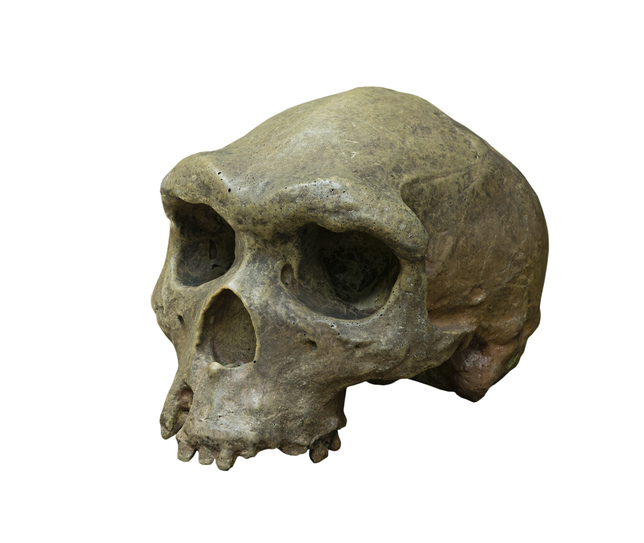
Ancient dental remains throughout the hominin lineage could elucidate modern human evolution.
In a study published in The Journal of Craniofacial Surgery, researchers analyzed the gnathic characteristics of four species — including Australopithecus africanus, A. robustus, Homo habilis and H. erectus — living about 2.5 million to more than 5 million years ago. Using 71 gnathic remains, they sought to determine whether patterns of alveolar bone loss linked to periodontal disease could help them better understand craniofacial changes that differentiated the Homo genus from the less derived Australopithecines by employing a strategy involving scanning electron microscopy, microfocus X-ray tomography, macrophotography and linear measurements.
The researchers found that as members of the Homo genus diverged from Australopithecines, they experienced greater alveolar bone loss with crateriform lesions and furcation defects that were nearly absent in A. africanus and A. robustus. In addition, H. habilis and H. erectus had greater variation in the distance from the enamel-dentine junction to the alveolar bone crest.
According to a news article from Oral Health reporting on the research, the researchers hypothesized that chronic periodontal disease, accompanied by genetic mutations, may have enabled changes to the facial anatomy of the Homo genus. The genetic alterations that occurred during the evolution of the Homo genus resulted in smaller crowns and more limited masticatory muscle mass without sacrificing chewing function, thereby allowing for a reduction in prognathism and an enlargement of the cranial cavity that led to the emergence of Homo sapiens.
Read more: Oral Health
See also the ADA Oral Health Topic: Forensic Dentistry and Anthropology
The article presented here is intended to inform you about the broader media perspective on dentistry, regardless of its alignment with the ADA's stance. It is important to note that publication of an article does not imply the ADA's endorsement, agreement, or promotion of its content.