
Is mini robot the future of crown placement preparation?
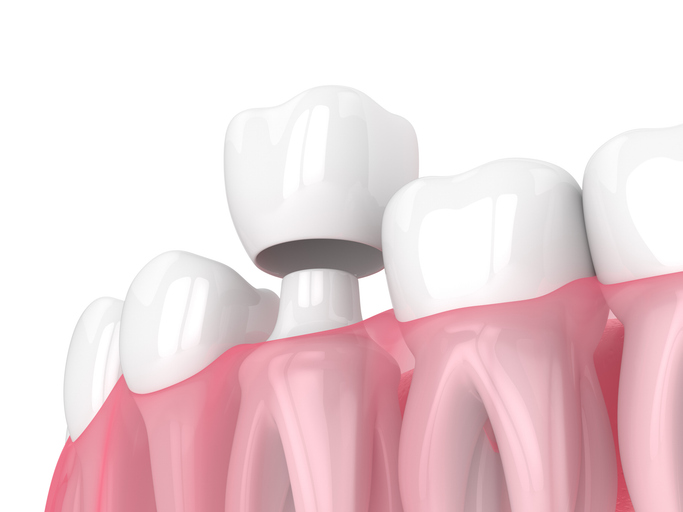
A novel dental device could potentially perform minimally invasive tooth preparation to help streamline dental restorations, according to a news release from the University of Basel in Switzerland.
Experts noted that patients who require a dental crown often need to make several appointments for dentists to remove the dental caries, prepare their teeth, take impressions, place temporary crowns, produce the permanent crown, and in a subsequent appointment, place the permanent crown.
In a study published in IEEE Transactions on Medical Robotics and Bionics, researchers developed and evaluated the performance of an automatic tooth preparation device prototype measuring 43-by-26-by-28 millimeters called the Miniature Intraoral Robot. They detailed that the novel device was designed to be mounted inside the patient’s mouth and operated by remote motor encoders connected through flexible shafts, cables and tubes without position sensors within the unit’s joints. The device then reduces the tooth surface with a wide drill and the sides of the tooth with a thinner drill.
Following a scan of the oral cavity during the initial appointment, dental professionals could order the permanent crown, create a custom-fitted dental splint upon which they can attach the Miniature Intraoral Robot, and devise a precise digital plan for the robot.
The researchers tested the efficacy of the device tooth models comprising synthetic resin and dental hybrid ceramic materials. They reported delay-free one-to-one torque transmission with different speed and frequency settings, successful circular path-following motions with and without grinding in open-loop control, and low average absolute positioning errors without grinding and deviations from the planned ground surfaces.
As part of their next steps, the researchers plan to integrate sensors and a camera into the component that is fitted to the patient’s mouth for position monitoring, measure the forces produced during drilling and assess how to modify the robot’s noise output for clinical use. They hope the Miniature Intraoral Robot can help automate the preparation of teeth for the placement of crowns as well as limit the number of required follow-up appointments for the procedure in the future.
Read more: University of Basel
The article presented here is intended to inform you about the broader media perspective on dentistry, regardless of its alignment with the ADA's stance. It is important to note that publication of an article does not imply the ADA's endorsement, agreement, or promotion of its content.