
Running biomechanics could predict Achilles tendinopathy
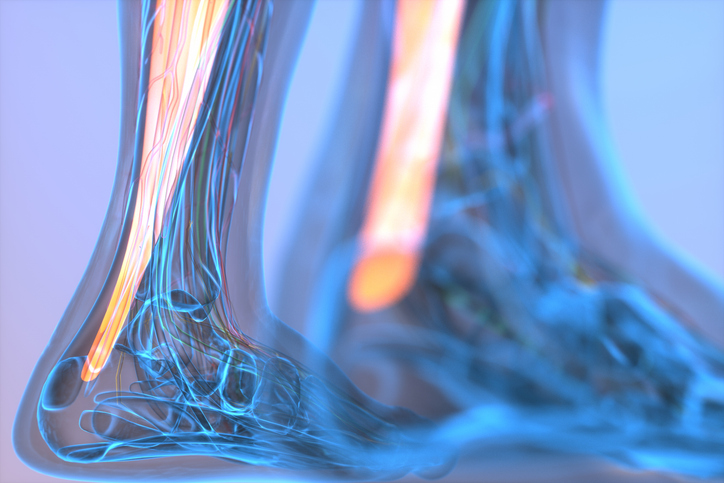
Researchers may have identified risk factors for Achilles tendinopathy in runners.
In a study published in the British Journal of Sports Medicine, the researchers examined the relationship between lower limb biomechanics and the incidence of Achilles tendinopathy in more than 900 runners and nonrunners. The participants were asked to complete questionnaires regarding their running habits and Achilles tendinopathy symptoms as well as wear a device to track their running and injuries.
After a follow-up of one year, the researchers found that the runners who displayed a higher peak ankle inversion moment during the stance phase of their running were less likely to develop Achilles tendinopathy. Conversely, runners who exhibited a lower peak ankle external rotation angle and ran for greater distances were more likely to experience onset of the condition.
The findings suggested that addressing the biomechanics of running could help limit the incidence of Achilles tendinopathy among runners.
Read more: British Journal of Sports Medicine
The article presented here is intended to inform you about the broader media perspective on dentistry, regardless of its alignment with the ADA's stance. It is important to note that publication of an article does not imply the ADA's endorsement, agreement, or promotion of its content.