
Study establishes ultrasound-based method to estimate muscle mass
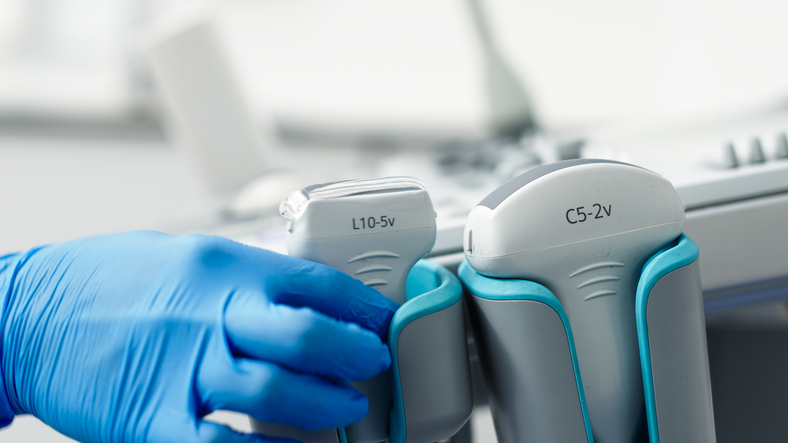
Researchers have examined the efficacy of using ultrasound to measure whole-body muscle mass.
In a study published in the Journal of Cachexia, Sarcopenia and Muscle, the researchers developed and validated ultrasound-derived equations designed to estimate whole-body muscle mass in more than 200 healthy white adult participants. They examined a total of 15 muscle thicknesses and cross-sectional areas of the right arm, trunk and leg. Magnetic resonance imaging was used as a reference standard.
The researchers found that a combination of ultrasound-acquired forearm extensor, rectus abdominis, rectus femoris, biceps femoris and tibialis anterior muscle thickness; cross-sectional area of the triceps brachii and tibialis anterior muscles; sex; weight; and BMI produced the most accurate estimations of whole-body muscle mass. They identified a simpler but less accurate option involving certain ultrasound and cross-sectional areas measurements plus sex and height to reduce the measurement burden.
The researchers indicated that implementing ultrasound could help overcome current challenges in measuring muscle mass with standard methods.
Read more: Cachexia, Sarcopenia and Muscle
The article presented here is intended to inform you about the broader media perspective on dentistry, regardless of its alignment with the ADA's stance. It is important to note that publication of an article does not imply the ADA's endorsement, agreement, or promotion of its content.